



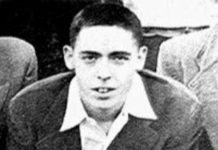




















Will this lightning that inhabits me / the heart of exasperated beasts / and of angry forges and blacksmiths / where the freshest metal withers? These verses by Miguel Hernandez appear in the work One Hundred Love Poems, edited by the Jaen Provincial Council in commemoration of the 80th anniversary of the death of the poet from Alicante.
The book has been the first that has seen the light coinciding with the cataloging as public domain of Hernandiana’s work, which now aspires to a more universal projection. According to the National Library, on January 1, 2023, the works of 174 Spanish authors, all of whom died in 1942, have entered the public domain.
The Intellectual Property Law establishes a term of 70 years for copyright to expire and become public domain. However, as they are authors who died before 1987, a previous law applies, specifically that of 1879, which establishes a term of 80 years. In this way, the family of Miguel Hernandez, who died in the Alicante prison on March 28, 1942, will stop receiving copyrights for the sale of the work of the poet of the Generation of ’27.
“This will make the work of Miguel Hernandez more visible and universal, which is the goal we set for ourselves when we acquired the Hernandiano legacy in 2013,” says Francisco Reyes, president of the Jaen Provincial Council. This institution paid three million euros a decade ago for the more than 5,600 records, including manuscripts, poems and other documents, of the poet from Orihuela. Two years earlier, in 2011, the Elche City Council rescinded the contract by which it undertook to pay 150,000 euros per year for 20 years to start the Miguel Hernandez Foundation and 7,000 euros per month for the family as a transfer of the legacy.
Since then, the legacy has been kept, fully digitized, in the facilities of the Institute of Giennenses Studies (IEG), and another part in the Miguel Hernandez-Josefina Manresa Museum, in Quesada (Jaen), the town where the wife of the father was born. Alicante poet, Josefina Manresa, the main guardian of Hernandiana’s work.
Not a few were the criticisms that the Jaen Provincial Council received in its day when it decided to acquire the legacy from the heirs of Miguel Hernandez. “They told us that we were bad businessmen for investing three million in a work that was later going to be digitized and, therefore, open to everyone,” recalls Reyes, for whom the main objective of this acquisition was none other than to open to the public universal access to the work of the author of Viento del pueblo or Nanas de la cebolla.
However, the good relationship maintained since then has allowed the poet’s heirs to donate the poem Aceituneros, which has become an anthem of the province of Jaen, for free, or, more recently, to authorize the publication of One Hundred Love Poems. “Miguel Hernandez’s poetry is radically loving, a poetry that communes with nature moved by the deep veins of human passion,” has written Jose Luis Ferris, author of this compilation of Miguel Hernandez’s love poetry. In addition, as a result of an agreement with the Instituto Cervantes, this month the collection that unites the poet from Alicante with the work of Latin American authors will be released. The first book will be dedicated to the poet Jose Rizal, a cultural icon of the Philippines.
The rights that are extinguished when the work is placed in the public domain are those of economic content and the heirs could only continue to be beneficiaries in the case of an unpublished work, since it would enjoy protection for 25 years from its publication in favor of the person to carry it out. However, the consideration of public domain opens new expectations about the appearance of new publications.
The name of Miguel Hernandez appears on the list that the National Library has just published with the names of Spanish authors and titles that have entered the public domain in 2023. Along with the poet from Orihuela there are others such as Eustaquio Jimenez (brother of Juan Ramon Jimenez and mayor of Moguer), the sculptor and draftsman Julio Gonzalez —who in 1899 moved to Paris to collaborate with Picasso—, the sculptor Julia Casagemas —one of the the first female opera authors in Spain, sister of Carlos Casagemas, a painter who was also a friend of Picasso— or the otorhinolaryngologist who invented ahauerotherapy —an intervention on the trigeminal nerve— Fernando Asuero.
Internationally, according to the Public Domain Day website, works by Virginia Woolf —To the Lighthouse—, Ernest Hemingway —the Men Without Women collection— or William Faulkner —Mosquitoes— are also free of rights. In the musical field, Puttin’ on the Ritz, by Irving Berlin, was released, which became popular thanks to the film Young Frankenstein.