






















Cold sweats, nervous giggles, stiff muscles, gasps—or not—and, if all goes well, a night when it’s particularly difficult to fall asleep. These are some of the effects that horror movies have on our bodies and minds and, who knows why, we love to experience fear locked in a movie theater.
While we try to unravel the mystery of our taste for horror and adrenaline rushes in front of the screen, I invite you to review in this list the 37 best horror movies of all time —leaving for last the jewel in the crown, which remains unbeatable—, in which we will find timeless classics by masters of the genre such as Alfred Hitchcock, John Carpenter, Tobe Hooper, Dario Argento or David Cronenberg.
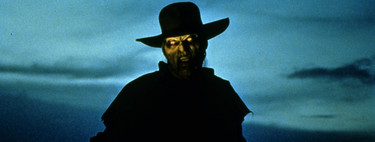
The Shining’, 1980
That indisputable genius named Stanley Kubrick dominated each and every genre he tackled throughout his career. It’s no wonder given his exceptional talent that his foray into horror resulted in a masterpiece like ‘The Shining’. A technical, formal and conceptual feat that plunges you into the impossible corridors and rooms of the Overlook Hotel while inviting you to lose your mind with the deranged Jack Torrance in a nightmare of the highest level.
‘Halloween’ (1978)
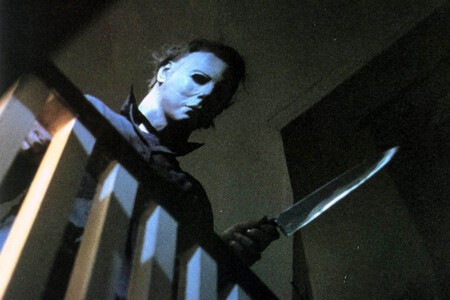
Filming in about 20 days and with a more than obvious limitation of resources —they had to collect and reuse even the leaves that appeared on the street floor between shots—, the teacher John Howard Carpenter revolutionized terror by setting a chair and marking a before and a next in the slasher subgenre with this enduring cult classic. A ghostly look at the purest evil, embodied in a gigantic Michael Myers clinging to the popular imagination for forty years.
‘The Thing’, 1982
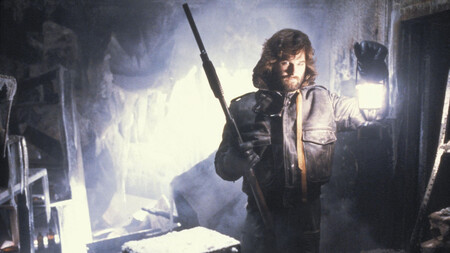
Although my favorite work by John Carpenter is the great ‘In the Mouth of Fear’, I have to admit that the master of horror peaked in 1982 with this remake of ‘The Enigma of Another World’, directed by his idolized Howard Hawks in 1951 With ‘The Thing’, the author refined his personal stamp to its peak, unleashing terror in the middle of Antarctica in a terrifying exercise, with visual effects that are still fascinating today and with a representation of evil that, once again, transcends the limits of the human.
‘Psycho’ (‘Psycho’, 1960)
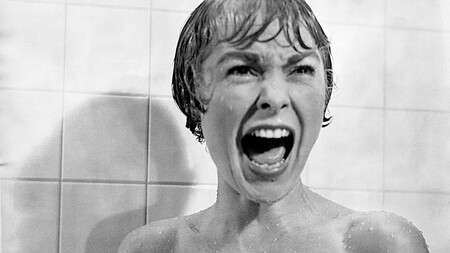
What could we expect from someone listed as the “master of suspense” if not a masterpiece like ‘Psycho’? In it, the good “Hitch”, in addition to laying —arguably— the foundations of the slasher , destroyed the nerves of the public in the early sixties with one of the most celebrated script twists in history, executed in a scene that continues burned into the collective imagination because of a knife, a shower and an ill-fated woman.
‘The photographer of panic’ (‘Peeping Tom’, 1960)
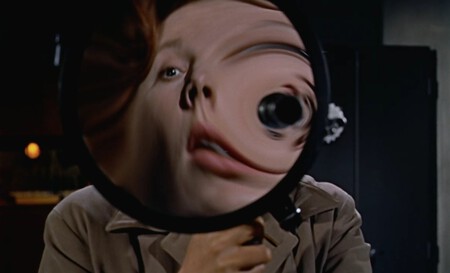
If we doubt that ‘Psycho’ is the “mother” of the slasher , it is because ‘The Panic Photographer’ was also released in 1960; a fascinating work by the always brilliant Michael Powell that explored the psyche of the canonical serial killer while uniting perversion, violence and cinema as few have achieved to date. A kind of grotesque study on the creative process and the figure of the author as atypical as he is outstanding.
‘The Texas Chainsaw Massacre’ (1974)
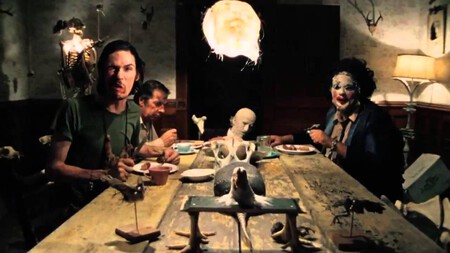
The clearest and most faithful representation of the relentless crudeness that reigned in terror during the seventies was this brave, wild and horrifying debut with which Tobe Hooper marked new paths to follow in the genre. Above his eternal Leather Face are the heartrending screams of the charming final girl played by Marilyn Burns and a unique formal style, with an almost documentary camera and a successful —and spectacular— use of the dirtiest 16mm.
‘The devil’s baby’ (‘Rosemary’s Baby’, 1968)
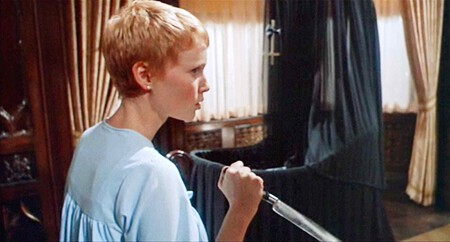
Perhaps the best word that can be used to define ‘Navy’s Baby’ is “nightmare”. Running for just over two hours, this hypnotic, haunting, and anguishing classic by Roman Polanski delves into the mind of Rosemary Woodhouse to explore her most earthly fears that arose from her pregnancy, while flooding the story with an unhealthy atmosphere in the one that cooks something that escapes all logic and that continues to make the hairs like scarpias even the most seasoned cinéfago.
‘The prophecy’ (‘The Omen’, 1976)
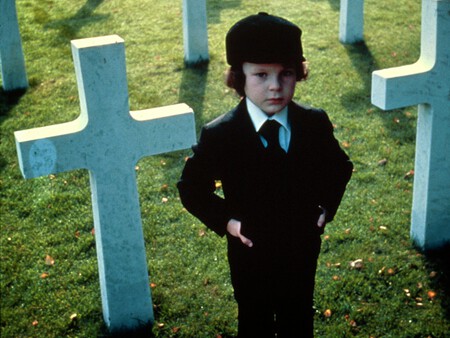
The child figure has always been closely linked to horror movies, but rarely in such an iconic and enduring way as in this ‘The Prophecy’. With an outstanding direction from the great Richard Donner, a brilliant lead performance from Gregory Peck and one of the best soundtracks in the genre signed by Jerry Goldsmith – who took the Oscar, as well as a nomination for best song for “Ave Satani” -, Damien’s story deserves a prominent place in the Olympus of the genre.
‘At the end of the stairs’ (‘The Changeling’, 1980)
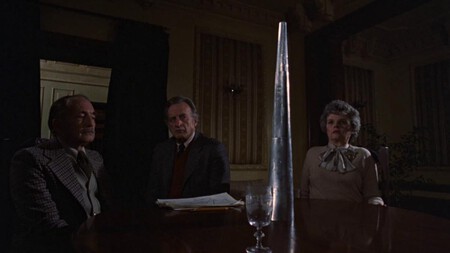
This cult classic from Peter Medak proves that with intelligence, good directing skills and an absolute mastery of atmosphere creation, you can make a ball bouncing down a set of steps chill the viewer’s blood. A magnificent and quintessential ghost story that unceremoniously embraces the classics of the subgenre to form a creepy, tragic and even emotional film.
‘Suspense’ (‘The Innocents’, 1961)
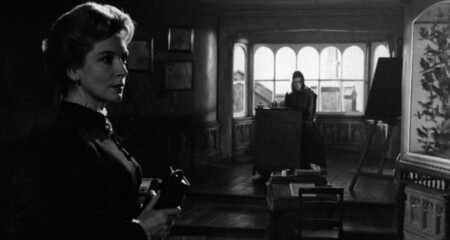
Based on Henry James’ novel “Another Turn of the Screw”, adapted to a screenplay by none other than Truman Capote himself, ‘Thriller’ took supernatural terror to a new level. Beyond its impeccable visual narrative and its expressionist —and pristine— black and white photography, this Jack Clayton classic stood out for its precise and controversial readings on childhood isolation and sexual repression.
‘Scream. Watch who’s calling’ (‘Scream’, 1996)
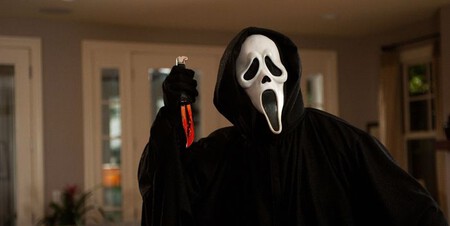
When it seemed that everything was written in the slasher subgenre , Wes Craven appeared to completely revitalize it in an exercise with a meta-cinematographic vocation that ended up transcending as a cult classic and as one of the greatest representatives of 90s terror. Perhaps its second part perfected the formula, but the original ‘Scream’ breathed new life into masked killers wanting to hunt down a few teenagers with a wonderful extra cinephilia between their frames.
‘A Nightmare on Elm Street’ (‘A Nightmare on Elm Street’, 1984)
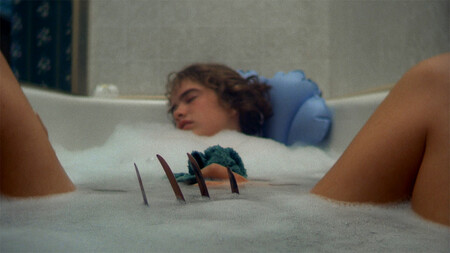
It is very difficult to think of mythical characters of the genre and that the “good” Freddy Krueger, played by the endearing Robert Englund, does not appear in the top five. With ‘A Nightmare on Elm Street’, Wes Craven brought terror to the world of dreams in a film that keeps its brutality intact as well as fresh a powerful imagery that marked the definitive coronation of the director as one of the titans of cinematic horror of all time. time.
‘The Blair Witch Project’ (‘The Blair Witch Project’, 1999)
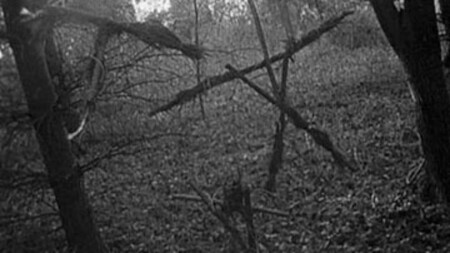
Although it is true that before 1999 there were great films that played with the mockumentary in the key of terror such as ‘Cannibal Holocaust’ or the great ‘It happened near his house’, ‘The Blair Witch Project’ —if we exclude the television show ‘Alien Abduction’, released a year earlier—was a pioneer in using the language of found-footage as we conceive it today. In addition to being a turning point; its game with the offfield, its hair-raising final stretch, its variety in the use of formats and its innovative promotional campaign make it a worthy representative of the genre on this list.
‘Shark’ (‘Jaws’, 1975)
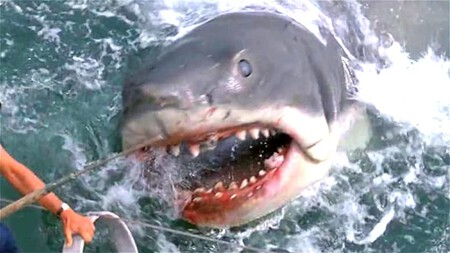
Little remains to be said that has not already been commented on as this masterpiece, not only of the genre at hand, but of the history of cinema. A master class in direction and mastery of suspense that shines both in its facet of a horror film —concentrated in its first half— and in the maritime adventure in which the story drifts once its trio of charismatic protagonists go hunting of the monster that devastates the beaches of Amity.
‘Alien, the eighth passenger’ (‘Alien’, 1979)
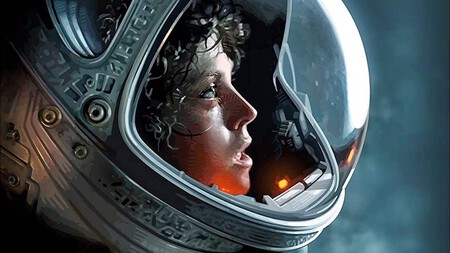
Conceived through an idea as interesting as moving ‘Jaws’ aboard a spaceship, ‘Alien’ was born in 1979 to go down in history as one of the scariest movies of all time. And this was not only due to the gruesome design of the xenomorph created by HR Giger, but also due to an exceptional direction by Ridley Scott that gave us some of the most impressive images of the genre and a script written by Dan O’Bannon that played with the unconscious of the spectator addressing the most uncomfortable psycho-sexual themes.