
























When Internet users perform the search “Agatha Christie best books” the results point to the work of an author considered a precursor of the detective genre. Both critics and amateur readers have acclaimed the titles of this British writer. In fact, the Guinness Book of Records considers her the best-selling novelist in history.
Much of the “blame” for such a label on Christie is due to Hercule Poirot and Miss Marple. They are two of the most famous detectives of all time and Christie’s best-known leading men. What’s more, Poirot became the only fictional character to receive an obituary in The New York Times , following his final appearance in Curtain (1975).
Agatha Christie’s life in a nutshell
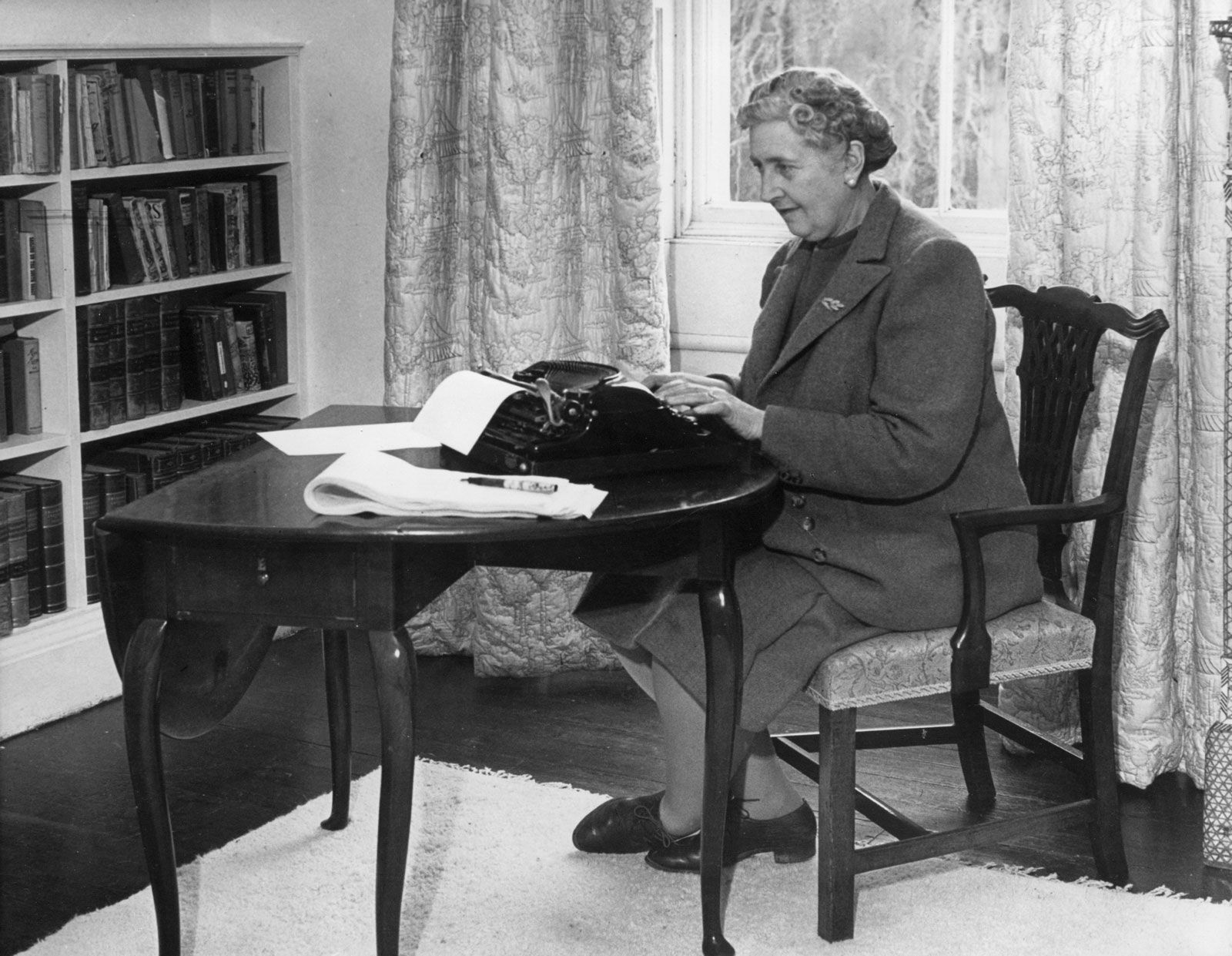 Agatha Mary Clarissa Miller first saw the light of day on September 15, 1890, in Torquay, England. She lived in an upper middle class family. She was homeschooled throughout her childhood, during which time she cultivated avid reading habits. During her teens she studied in Paris and served as a volunteer nurse during the Great War.
She was married to Archibald Christie between 1914 and 1928, with whom she had her only daughter, Rosalind Hicks (1919 – 2004). Her second marriage was to the renowned archaeologist Max Mallowan. With him, she collaborated on important excavations in the Middle East and North Africa (places frequently evoked in the writer’s settings). The couple remained together until Christie’s death on January 12, 1976.
Characteristics of her work
Agatha Christie published 66 crime novels, six romance books and 14 short stories (signed under the alias of Mary Westmacott). Of course, her weight in the history of universal literature is given by her immense contribution to the detective genre . Which was a path started by her iconic investigator Hercules Poirot with The Mysterious Case of Styles (1920).
However, despite being a little less well known, the other characters created by Christie cannot be left out. Such is the case of Miss Marple, the Beresford couple, Colonel Race, Captain Hastings and Superintendent Battle, among others . It is noteworthy that Miss Marple and Poirot never meet in the same novel.
Books starring Hercule Poirot
Curtain (1975), the masterful story that ends with the death of the famous detective
The Belgian private detective stars in 33 novels and 50 short stories by Agatha Christie, which were published between 1920 and 1975 . Despite the aversion and weariness felt by the British author towards her own character since the mid-1930s, she refused to kill him. The reason: the public liked Poirot too much and the writer herself felt that it was her duty to please her audience.
Finally, in Curtain (1975) the detective dies from heart complications. When, after “sacrificing” his own moral code, he intentionally leaves his pills out of his reach. Well, Poirot murders a clever manipulator who would never have been tried . The “victims” committed the crimes for him. Originally this book was written 36 years before its publication.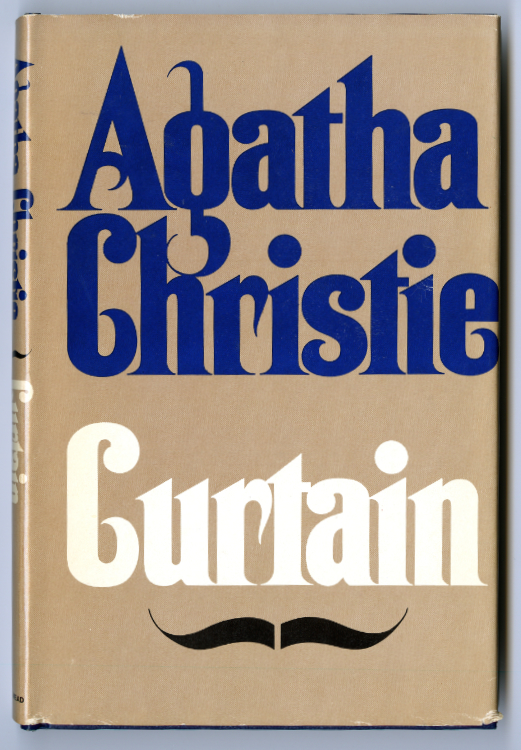
The Assassination of Roger Ackroyd (1926)
The events take place in King’s Abbot (fictitious name) and are narrated by Dr. Sheppard, one of the inhabitants of the small town. There, Mrs. Ferrars is seized with despair after killing her husband and being the victim of blackmail . Then, the distraught lady decides to commit suicide and leaves a letter to Roger Ackroyd – the man she loves – in which she reveals what happened.
But Ackroyd is also murdered and the only person capable of elucidating the facts is Poirot, who is enjoying his recent retirement at King’s Abbot. The intriguing development of events culminates in a surprise that is considered the most impressive in Christie’s novels.
If Poirot is the neat investigator who solves intricate cases in the confines of the British Empire, Miss Marple’s investigations are limited to the English countryside. Specifically, the crimes solved by this elderly spinster lady take place in St. Mary Mead , a fictional small town in the south of England.
In all, Christie created 13 novels plus several short stories starring Miss Marple. She is described as a lovable, lonely, idealistic old lady with a fondness for puzzles and extensive knowledge of nature. Precisely, that knowledge of hers allows her to unveil mysteries that are indecipherable even for the most experienced experts from Scotland Yard.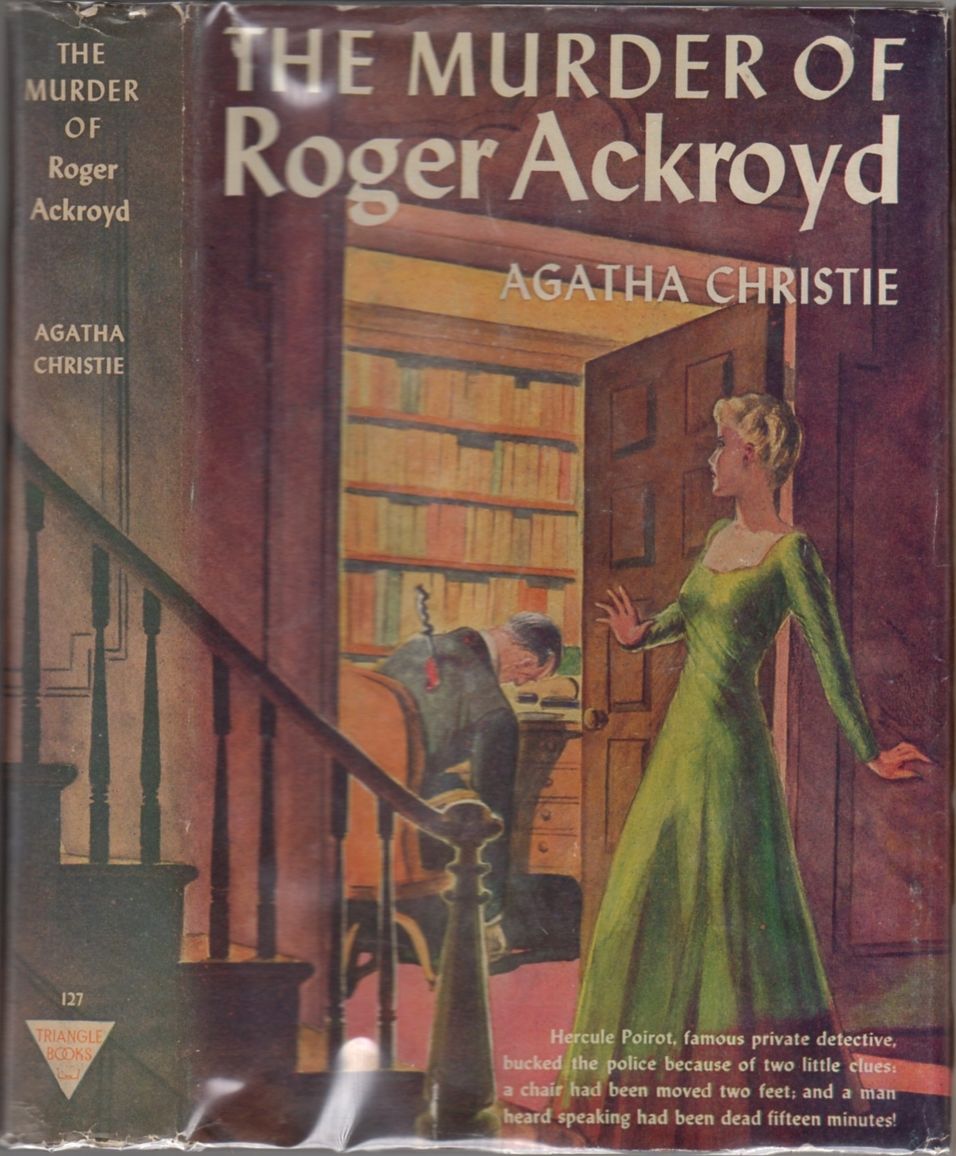
Death at the Vicarage (1930)
With this novel, Christie introduces the world to Miss Marple. It was October 1930, and a female figure as the protagonist of a crime novel was something difficult for the public to digest . However, with the already long and fruitful career of the writer, the doors were opened wide and the readers of the United Kingdom gave a pleasant welcome to the work. Likewise, in the USA, Agatha readers celebrated the arrival of this new character.
St. Mary Mead is the (fictional) town that serves as the setting for Death at the Vicarage. It’s about a typical English town —accurately described by Christie— that is shaken by the assassination of Lucius Protheroe. The body mysteriously appears in the vicar’s study. Everything could be resolved quickly, if this particular character —justice of the peace in the area and retired colonel— were not one of the most hated beings in the entire town.
Miss Marple thus finds herself in an unusual setting. Not only does she have to deal with the fact that Protheroe was hated by many villagers, but also that after his murder, two people plead guilty. The investigator can only apply her knowledge to refine the list of suspects until it is reduced to seven. Part of what adds more tension and intrigue is that the vicar himself is part of the alleged culprits. At the end, as usual in Christie’s novels, the surprise embraces the readers.